


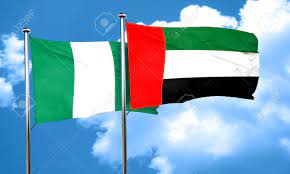
UAE Stops VISAl For Nigerians Over Diplomatic Quarrel

 The United Arab Emirates (UAE) immigration authorities have announced a ban on visa applications from Nigerians.
In a notice issued on Friday to its trade partners in Nigeria, including travel agents, the Dubai authorities said that “all Dubai applications submitted are now rejected”.
The UAE government said rejection notices would be sent in batches to applicants.
It said the rejections “are general for Nigerians and Approvals are on hold at the Moment”.
The UAE government said the suspension would hold pending the resolution of issues between it and the Nigerian government.
“Kindly advise your clients to resubmit applications when the issue is resolved between both governments”, the notice reads.
The development comes over a month after the UAE stopped issuing tourist visas to persons under the age of 40, affecting Nigerians as well as other countries.
Speaking on the issue, the federal government said Nigerians need to respect the immigration laws of other countries to avoid “unwarranted treatment”.
“The general public is invited to note and be guided that the Government of the UAE has introduced a new visa regime and has stopped issuing tourist visas to persons under the age of 40 years, except for those applying for family visas,” the ministry of foreign affairs had said.
“It is, therefore, instructive for prospective visa applicants to indicate clearly their visa preferences without any ambiguity and also respect the immigration laws of other countries to avoid unwarranted treatments.”
For several months in 2021, Nigeria and UAE battled several diplomatic rows in aviation.
King Charles III Writes, Condoles With Buhari, Over Floods:
King Charles III of England yesterday wrote an open letter to President Muhammadu Buhari concerning the devastating floods bedeviling most states of the federation, declaring that he “is deeply saddened” about the lives lost to the disaster.
This is coming on the heels of a report by the United Nations Children’s Fund (UNICEF) indicating that 2.5 million flood victims in Nigeria are in need of humanitarian assistance, “while more than 1.5 million children may face increased risk of waterborne diseases, drowning and malnutrition following the massive flooding.”
In the latest casualty figures, no fewer than 600 persons have lost their lives, with 1.3 million people rendered homeless and over 200,000 houses destroyed by floods across 34 states.
In the open letter signed by the monarch yesterday, King Charles III sympathised with the victims of the flood, stating that the UK “stands in solidarity” with Nigeria over the flood.
The letter reads, “Your Excellency, Dear Mr. President, I wanted you to know how deeply saddened both my wife and I are to hear of the many people who have lost their loved ones and whose lives have been so dreadfully affected as a consequence of the devastating floods across Nigeria.

“We remember with the greatest affection our visits to Nigeria and the kindness of the people we met.
“However inadequate this may be under such tragic circumstances, our most heartfelt sympathy is with all those who have suffered so much, and our thoughts are with those working to support the recovery efforts.
“I know that the United Kingdom stands in solidarity with Nigeria as you recover from these truly terrible events.”
2.5m Nigerians Need Humanitarian Assistance
The United Nations Children’s Fund (UNICEF), yesterday disclosed that fewer than 600 persons have lost their lives to the raging floods, with 1.3 million people rendered homeless and over 200,000 houses destroyed across 34 states.
UNICEF, in a statement unveiled by its Representative in Nigeria, Cristian Munduate, indicated further that 2.5 million people in Nigeria are in need of humanitarian assistance as a result of the floods, “60 per cent of which are children and are at increased risk of waterborne diseases, drowning and malnutrition due to the most severe flooding.”
UNICEF adds: “In the North-eastern states of Borno, Adamawa and Yobe alone, a total of 7,485 cases of cholera and 319 associated deaths were reported as of 12 October.
“As rains are expected to continue for several weeks, humanitarian needs are also expected to rise. Children and adolescents in flood-affected areas are in an extremely vulnerable situation. They are particularly at risk of waterborne diseases and emotional and psychological distress.”
The UN agency said floods were adding a fresh layer of complexity to the precarious humanitarian situation in the country, saying the immediate priority needs for children include health, water, sanitation, hygiene, shelter and food.
It affirmed that more funding and resources were required to respond to growing needs and to sustain ongoing humanitarian interventions, with a focus on the most vulnerable, including children with disabilities.
Also, according to the UNICEF’s Children’s Climate Risk Index (CCRI), Nigeria is at extremely high risk of the impacts of climate change, ranking second out of 163 countries.
“Children in ‘extremely high risk’ countries face a deadly combination of exposure to multiple climate and environmental shocks combined with high levels of underlying child vulnerability, due to inadequate essential services, such as water and sanitation, healthcare and education.
“To date, UNICEF has supported the government response in three affected States – Jigawa, Niger, and Kaduna, including through the provision of cash assistance, distribution of cholera kits, government-led mobile health teams, temporary learning centres and learning kits and cholera kits.
“With additional support, UNICEF can scale up its response in other states to provide lifesaving medical equipment and essential medicines, chlorination of water and sanitation supplies, as well as to support the prevention of and response to sexual and gender-based violence,” the statement added.
